March 18, 2026
Developer Spotlight- Building Trust, Tools, and the Future of Open Silicon
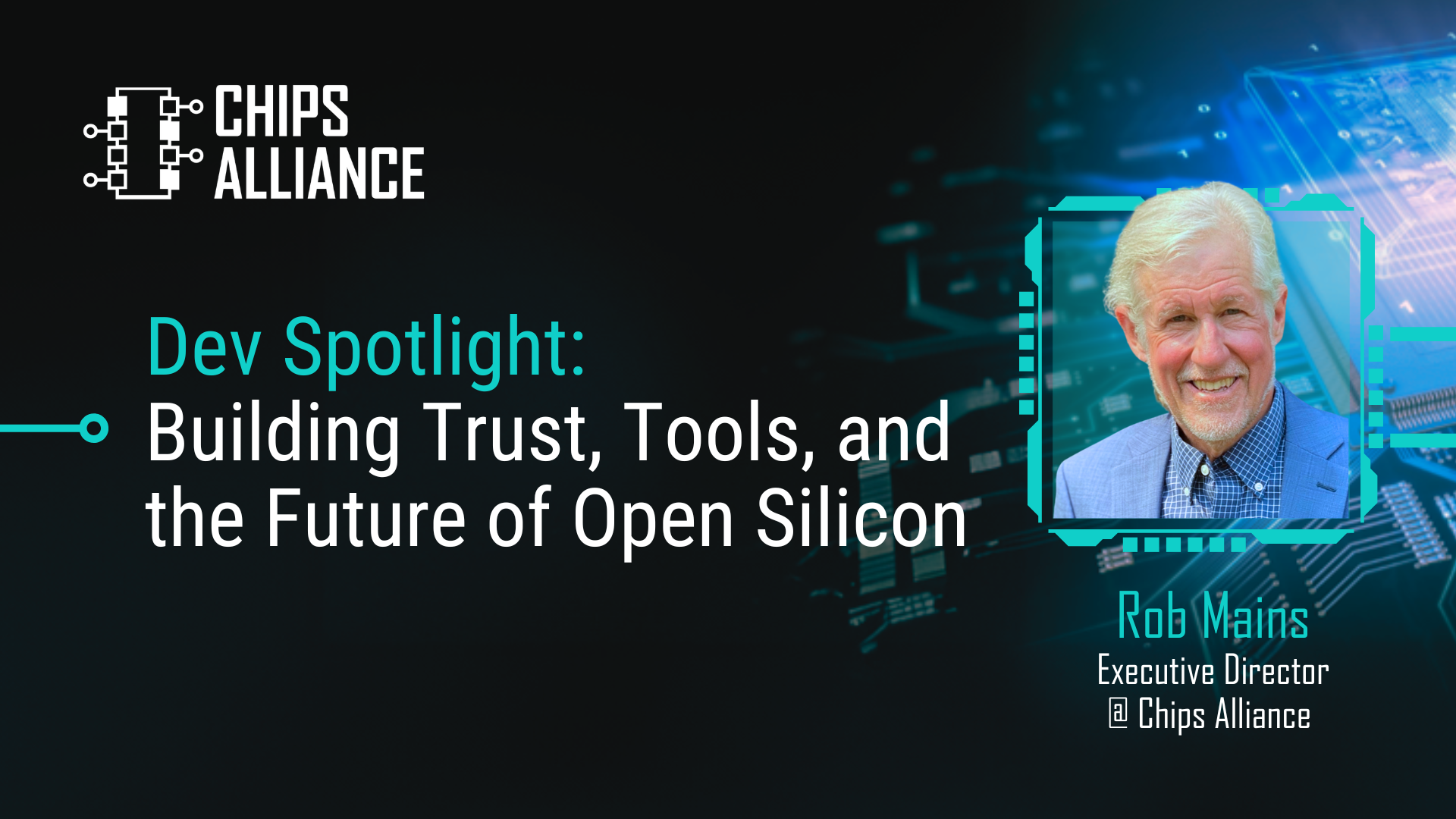
In this Developer Spotlight, Rob Mains, Executive Director of CHIPS Alliance, reflects on the lessons that shaped his career, the realities of open source silicon, and what it will take to build a sustainable, production-ready open hardware ecosystem.
From IBM to Oracle, Rob Mains has spent decades working across the full stack of silicon development. This experience has helped shape a leadership philosophy grounded in trust, respect and collaboration. At CHIPS Alliance, this perspective supports a neutral collaboration model that allows companies to jointly develop foundational technologies without blurring competitive boundaries.
“Respect for the individual is the foundation of effective collaboration and of good engineering.”
From Vertically Integrated Systems to Open Collaboration
Early exposure to vertically integrated environments, where everything from EDA tools to silicon manufacturing lived under one roof, reinforced the value of seeing the entire system end to end. This is the most important lesson I learned from my first IBM manager, Bob Tigue. It is the basis of how I approach everything. Open collaboration is how that holistic view is recreated across companies, disciplines, and geographies.
Open source silicon is not about replacing proprietary design. Instead, it is about sharing what should be shared: foundational components that are effectively commodities. By collaborating on these building blocks, companies can focus their resources on higher-level innovation where true differentiation occurs.
“Open source works best at the foundational layer where everyone needs the same capabilities and no one benefits from reinventing them.”
Caliptra: From Collaboration to Production Silicon
Caliptra is a prime example of this model in action. Implemented collaboratively under the CHIPS Alliance, Caliptra demonstrated that open source hardware IP can be designed, integrated into SoCs, manufactured and deployed in production environments. Its success helped validate open collaboration as a credible and cost-effective approach for high-assurance silicon.
“Caliptra proved that open source silicon can move from collaborative development to real, production-ready deployment.”
As open silicon matures, production readiness is defined not by aspiration, but by evidence: multiple tape-outs, successful deployments, and sustained use in the field. Community adoption builds trust and is increasingly supported by a growing ecosystem of companies offering services and commercial backing around open IP.
“Production readiness is earned through use with tape-outs, proven silicon, and trust built over time.”
While open RTL and many EDA capabilities have advanced significantly, challenges remain. Design Rule Checking and formal verification continue to require deeper collaboration with foundries and broader industry participation. These gaps underscore the ongoing need for a neutral convener to align stakeholders around shared technical priorities.
Trust as the Currency of Hardware Collaboration
At scale, the greatest barrier to collaboration is trust, not technology. Successful multi-company efforts require alignment on both technical goals and business objectives. CHIPS Alliance exists to reduce friction, provide stability, and enable collaboration in an industry where the cost of failure is exceptionally high.
“Large-scale hardware collaboration succeeds or fails on trust and aligned objectives.”
Engineering rigor remains non-negotiable. Modern open silicon projects increasingly rely on CI/CD practices to accelerate development, improve quality, and support transparent, multi-party contributions. Thus, moving away from rigid milestone-driven models toward continuous validation.
Preparing the Next Generation of Silicon Engineers
Looking forward, workforce development and academic collaboration are critical to long-term ecosystem health. Open silicon offers engineers a rare opportunity to understand the full stack - from transistors to systems - and an experience once confined to a handful of vertically integrated companies.
“Open silicon may be the only way for the next generation of engineers to see and shape the entire stack.”
The next frontier lies in applying open, collaborative approaches to emerging areas such as multi-agent AI for chip design, rethinking how teams explore new process nodes, architectures, and design flows.
“The future of silicon innovation depends on openness, trust and collaboration at scale.”
For updates on formal verification, roadmap discussions, and new contributor guides, stay tuned to the CHIPS Alliance blog. You can also keep up to date with CHIPS Alliance by connecting with the community on LinkedIn or subscribe to our quarterly newsletter here.